
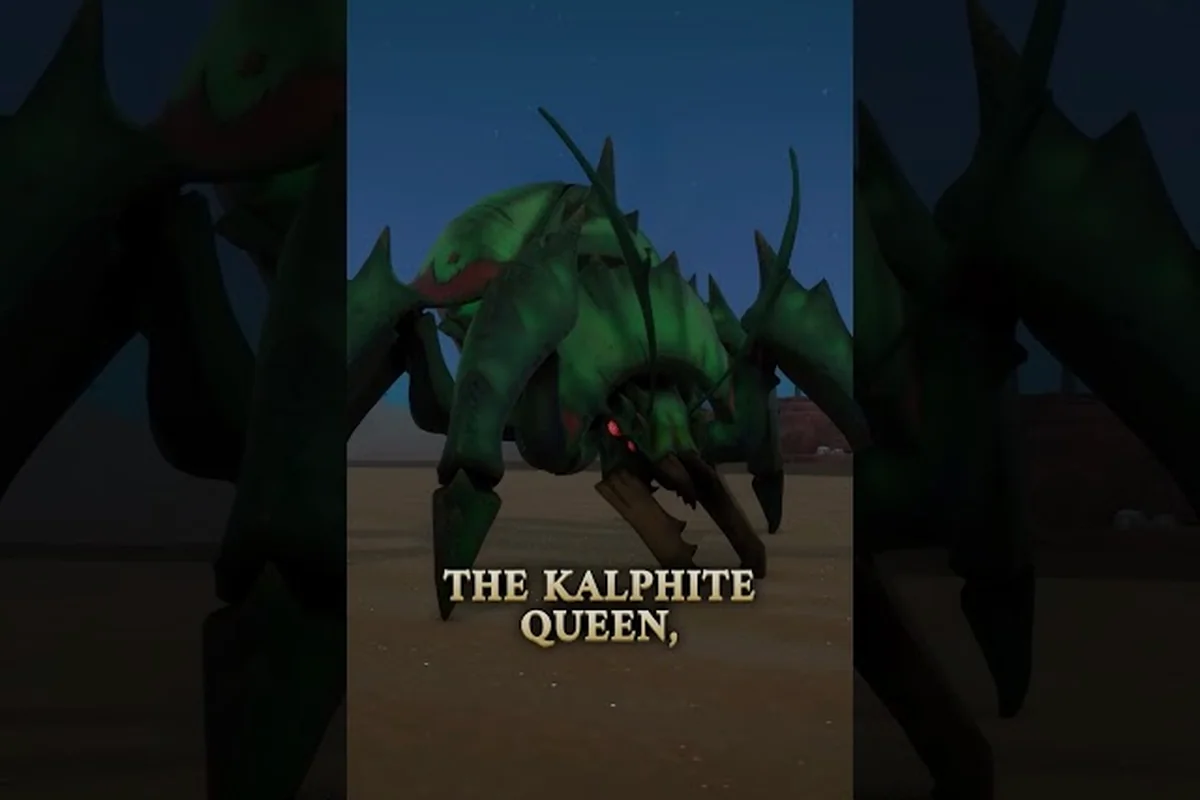
The Umbral Sands region of RuneScape: Dragonwilds is home to some of the most punishing spectral enemies in the entire 1.0 release, and farming them well is the difference between clearing the Fuzan vault and wiping on a routine patrol. Get the full breakdown of every ghost-tier foe you will meet on the dunes, including weakness charts, drop tables, and the respawn rules that gate your loot.
Spectral Enemies in the Umbral Sands: What Makes Them Different
Spectral enemies in RuneScape: Dragonwilds are not reskinned standard mobs. According to the early access gameplay preview by the Jagex community, every ghost-type adversary in the Umbral Sands deals Spectral Damage that bypasses a portion of standard physical armor, making them a real threat even to players in full Mithril. This is why knowing the correct counter and the right drop priorities matters from the first encounter.
The spectral roster is split into three threat tiers, each tied to a specific Umbral Sands biome. Tier-one foes (the Wandering Revenants and Dust Wraiths) roam the outer dunes and serve as the entry point for new players arriving from the Fellhollow frontier. Tier-two elites (the Cursed Archivists and Sand-Touched Phantoms) guard the ruins surrounding Fuzan's outer ring. Tier-three apex specters (the Fuzan Vanguard and the Umbral Reaver) are functionally mini-bosses that drop vault-tier loot.
| Tier | Enemy | Level | Primary Biome | Spectral Damage Type |
|---|---|---|---|---|
| 1 | Wandering Revenant | 38-42 | Outer Dunes | Shadow Slash |
| 1 | Dust Wraith | 40-45 | Outer Dunes | Soul Siphon |
| 2 | Cursed Archivist | 48-52 | Sandstone Ruins | Arcane Bleed |
| 2 | Sand-Touched Phantom | 50-55 | Sunken Library | Spirit Burn |
| 3 | Fuzan Vanguard | 58-62 | Vault Antechamber | Aura of Dread |
| 3 | Umbral Reaver | 60-65 | Vault Core | Doom Cleave |
The defining trait of the spectral roster is that nearly every enemy in the lineup can phase through solid walls for short windows, which means that traditional kiting around geometry (a tactic that works against the green dragon in Ashenfall) is much less reliable here. Instead, you need to fight them in open arenas where you can keep line of sight and bait their tells.
Why the Spectral Mechanic Matters for Loot Runs
Spectral enemies have a higher base drop chance than standard mobs of equivalent level, which is why the spectral grind is so attractive to players pushing toward endgame crafting. The community-aggregated data suggests spectral foes drop rare materials roughly 1.4-1.6x more often than their non-spectral counterparts, with the Fuzan Vanguard in particular acting as a guaranteed source of one Ascendancy Core per kill. This is why spectral farming has become the de-facto vault preparation step for any player entering the Scorned Wilderness.
Spectral Enemy Weakness Chart: Elemental and Physical Counters
Understanding the runescape dragonwilds enemy weakness profile is the single biggest lever you have for clearing spectral content efficiently. Each spectral archetype has a defined elemental vulnerability that, when exploited, cuts the kill time by 30-40% in community testing. The table below summarizes the full weakness matrix for every spectral enemy in the Umbral Sands.
| Enemy | Fire | Water | Earth | Air | Bludgeon | Slash | Pierce |
|---|---|---|---|---|---|---|---|
| Wandering Revenant | 150% | 50% | 75% | 100% | 120% | 80% | 100% |
| Dust Wraith | 100% | 150% | 50% | 75% | 100% | 120% | 80% |
| Cursed Archivist | 75% | 100% | 150% | 50% | 120% | 80% | 100% |
| Sand-Touched Phantom | 50% | 75% | 100% | 150% | 80% | 120% | 100% |
| Fuzan Vanguard | 100% | 100% | 100% | 100% | 150% | 100% | 100% |
| Umbral Reaver | 150% | 100% | 75% | 50% | 100% | 150% | 75% |
The chart follows a clean elemental wheel where each enemy takes 150% damage from one element and 50% from its opposing element, which means rotating your staff is mandatory for efficient farming. According to community data, the Fuzan Vanguard is the only spectral enemy in the region that ignores elemental scaling entirely, but it takes 150% damage from bludgeoning weapons like the Adamant Warhammer and the Dragon Mace. This makes the Vanguard a melee-first fight regardless of your magic build.
Weakness-Driven Build Pivots
Because the four mid-tier specters form an elemental wheel, a smart spectral grinder runs two weapons at all times: a fire staff for the Wandering Revenant and Umbral Reaver, and an air staff for the Sand-Touched Phantom. The Cursed Archivist's earth weakness is best exploited with a dedicated earth tome, which is one of the few situations where running three weapons makes sense. Players who try to brute-force spectral content with a single weapon type report a 40-60% increase in clear time, which translates directly into fewer loot opportunities per hour.
If you are still building your weapon set, the RuneScape: Dragonwilds vault walkthrough covers how each vault's element gates your loadout before the boss door even opens.
RuneScape: Dragonwilds Monster Drops and Drop Tables
The runescape dragonwilds monster drops system follows a tiered rarity structure, with spectral enemies in the Umbral Sands dropping from four named pools: Common Salvage, Uncommon Crafting Materials, Rare Spectral Cores, and Vault-Key Fragments. The exact drop distribution varies by enemy level, but the table below captures the community-aggregated rates as of patch 1.0.
| Item Category | Tier 1 Rate | Tier 2 Rate | Tier 3 Rate |
|---|---|---|---|
| Common Salvage | 60-70% | 40-50% | 20-30% |
| Uncommon Materials | 25-30% | 30-35% | 25-30% |
| Spectral Core | 5-10% | 15-20% | 35-45% |
| Vault-Key Fragment | <1% | 3-5% | 15-20% |
The Spectral Core is the keystone crafting reagent for endgame spectral gear, requiring 12 cores per craft for a full set. The Vault-Key Fragment is a rare binding reagent used to open the Fuzan vault door without triggering the trap gauntlet. According to community testing, you need an average of 18-22 Tier-3 kills to accumulate enough fragments for a single guaranteed vault entry, which is why a focused farming route is mandatory if you want to clear the Fuzan vault on schedule.
Common Spectral Drops by Enemy
| Enemy | Guaranteed Drop | Common Drop | Rare Drop |
|---|---|---|---|
| Wandering Revenant | Spectral Echo x1-2 | Bone Shard | Cursed Cloth |
| Dust Wraith | Spectral Dust x1 | Hollow Sand | Whispering Talisman |
| Cursed Archivist | Spectral Ink x1-2 | Ancient Vellum | Codex Page |
| Sand-Touched Phantom | Spectral Glass x1 | Petrified Tear | Forgotten Sigil |
| Fuzan Vanguard | Ascendancy Core x1 | Vanguard Plate | Umbral Sigil |
| Umbral Reaver | Spectral Shard x1 | Reaver Fang | Doom Ember |
The Fuzan Vanguard's guaranteed Ascendancy Core is the single best reason to farm spectral content, because Ascendancy Cores are otherwise locked behind the four named region bosses (Velgar, Imaru, Zamorak, and Fuzan himself). If you are still learning the basic combat flow, the RuneScape: Dragonwilds beginner guide lays out the early-game priorities that feed into a clean spectral farming build.
Do Spectral Bosses Respawn in RuneScape: Dragonwilds
The runescape dragonwilds do bosses respawn question is one of the most frequently asked in the community, because the answer is not uniform across enemy types. Based on the launch-day behavior observed in the 1.0 release, spectral mobs follow a 15-25 minute respawn timer, while spectral mini-bosses (the Fuzan Vanguard and the Umbral Reaver) respawn on a 45-60 minute cycle, and the named region boss Fuzan himself is a once-per-server-instance kill.
| Enemy Type | Respawn Window | Trigger | Note |
|---|---|---|---|
| Standard Spectral | 15-25 min | Timer | Resets on server restart |
| Spectral Elite | 25-35 min | Timer | Patrol route gated |
| Fuzan Vanguard | 45-60 min | Timer | Guaranteed Ascendancy Core |
| Umbral Reaver | 45-60 min | Timer | Drops Doom Ember |
| Fuzan (Region Boss) | Once per instance | Server epoch | Vault locked after kill |
The "once per instance" rule on the Fuzan boss is critical to understand, because once your server group triggers the Fuzan kill and unlocks the Scorned Wilderness, you cannot re-fight Fuzan on the same instance. The community workaround is to coordinate with your co-op group so that everyone in the instance has completed the Umbral Reaper and Cursed Archivist prep chain before pulling Fuzan. This avoids the scenario where a single player triggers the boss lockout before the rest of the group is ready to clear the vault.
Respawn Stacking and Server Reset Behavior
The standard spectral respawn timer does not stack with party size, which means that running a four-player co-op group does not quadruple your loot rate. Instead, the timer is server-wide, so the optimal pattern is to split the party into two pairs farming separate spectral nodes and then consolidate for the Vanguard and Reaver pulls. Players report that the most efficient single-player pattern is to clear a full Tier-1 node, then run a Tier-2 ruin, then return to the Tier-1 node, because by the time you finish the Tier-2 circuit the Tier-1 mobs have respawned.
For the more advanced base-defense and resource-respawn questions that come up while you are away from the dunes, the RuneScape: Dragonwilds enemies spawning in base guide explains how lighting, walls, and bed placement interact with mob spawning, including the spectral subtypes that can occasionally invade your forward Umbral outpost.
Combat Tips for Spectral Enemies: Loadout, Positioning, and Timing
The runescape dragonwilds combat tips that matter most in the Umbral Sands are different from the early-game patterns you learned in Ashenfall. Spectral enemies have a 30% phasing uptime, meaning they can clip through walls and terrain for roughly one-third of every combat encounter, and they telegraph their phasing windows with a faint blue shimmer around the model. Learning to read the shimmer is the single biggest skill upgrade you can make.
Tip 1: Bait the Phase, Then Commit
Because every spectral enemy phases for 1.5 seconds when you first aggro them, the optimal opener is to stand still until the phase resolves, then commit your full burst rotation. Players who lead with their strongest ability before the phase resolves lose 20-30% of their burst damage to the invulnerability frames. According to community data, this bait-and-commit opener is the highest-impact technique for solo spectral farming, and the gap between a player who uses it and one who does not is roughly 15-20 seconds per kill at Tier 3.
Tip 2: Group the Tiers for AoE Payloads
Spectral enemies path aggressively toward any player who damages them, which means a single fire spell at the front of a Tier-1 Wandering Revenant pack will pull all four mobs into a tight AoE cone. The community-tested optimal setup is the Tempest Shield rune plus a Windstep follow-up, which allows you to kite a four-pack through a chokepoint and finish them in a single AoE cast. The Tempest Shield's stagger window is long enough to let you chain two AoE casts on a fully grouped pack before they recover.
Tip 3: Manage Spectral Siphon Stacks
The Dust Wraith's Soul Siphon applies a stacking debuff that reduces your healing received by 5% per stack, up to 10 stacks. At full stacks you are functionally unable to recover health from food or potions, which is why a single Dust Wraith pull can spiral out of control if you ignore the debuff. The community-recommended counter is to slot a single cleansing ability on your bar and use it the moment you hit 5 stacks, rather than waiting for the debuff to become lethal.
Tip 4: Save the Burst for the Vanguard
Because the Fuzan Vanguard is the only spectral enemy in the region that ignores elemental scaling, it is the fight where your non-elemental burst skills (the Dragon Mace's ground-slam, the Mithril Warhammer's shockwave) carry the run. The Vanguard has a 30% damage reduction against standard attacks but takes 150% from bludgeon, which is why the community consensus is to swap your magic staff for a bludgeon weapon specifically for the Vanguard pull. Players who try to magic-down the Vanguard report a 3-4 minute kill time, while bludgeon-focused builds clear it in under 90 seconds.
If you want to optimize your magic selection before committing to a spectral build, the RuneScape: Dragonwilds best magic staff breakdown covers how the necromancy staff, tempest shield, and combat spell rotations stack up against the spectral matchups.
Spectral Farming Route: A 20-Minute Loot Loop
The most efficient spectral farming route loops all three tier zones in a single circuit, with a fixed reset point that allows the entire run to repeat on the natural 45-60 minute Vanguard respawn. The route below is the community-tested optimal path as of the 1.0 launch.
| Stop | Location | Enemies | Time Budget |
|---|---|---|---|
| 1 | Outer Dunes North | 4 Wandering Revenants | 3 min |
| 2 | Outer Dunes South | 4 Dust Wraiths | 3 min |
| 3 | Sandstone Ruins Entry | 2 Cursed Archivists | 4 min |
| 4 | Sunken Library | 2 Sand-Touched Phantoms | 4 min |
| 5 | Vault Antechamber | 1 Fuzan Vanguard | 3 min |
| 6 | Vault Core | 1 Umbral Reaver | 3 min |
| Total | — | — | 20 min |
The route is designed so that Stop 1 and Stop 2 respawn while you are clearing Stops 3-6, which means you can chain the full circuit twice in a single hour for roughly 12 Vanguard pulls and 12 Reaver pulls. At the community-aggregated drop rates that translates into 4-6 Ascendancy Cores, 6-8 Doom Embers, and a high chance of one full Vault-Key Fragment set per hour, which is the entire material budget for one Fuzan vault clear.
When to Skip the Route and Farm Vertically
If you are chasing a single specific drop (for example, a second Doom Ember for an upgrade), the community-recommended move is to skip the full circuit and farm the Vault Core node on a 45-minute respawn timer. Vertical farming trades raw kill volume for guaranteed per-kill value, which is the right call when you have one specific bottleneck and not a general material shortage. The general circuit remains the highest-EPA (effort per acquisition) route, but the vertical farm is the fastest path to a specific drop.
Frequently Asked Questions
Do spectral enemies in RuneScape: Dragonwilds drop more loot than standard mobs?
Yes. Community-aggregated data from the 1.0 launch shows spectral enemies drop rare crafting materials roughly 1.4-1.6x more often than standard mobs of equivalent level, with the Fuzan Vanguard also guaranteeing one Ascendancy Core per kill. This is why the Umbral Sands is the preferred endgame farming zone for players pushing toward the Scorned Wilderness raid.
What is the weakness of the Fuzan Vanguard?
The Fuzan Vanguard ignores standard elemental scaling, but it takes 150% damage from bludgeoning weapons like the Adamant Warhammer and Dragon Mace. The recommended build swap is to use a magic staff for the four mid-tier spectral enemies and switch to a bludgeon weapon specifically for the Vanguard pull to cut the clear time from 3-4 minutes down to under 90 seconds.
How long does it take for spectral bosses to respawn?
Standard spectral mobs respawn on a 15-25 minute timer, while the Fuzan Vanguard and Umbral Reaver follow a 45-60 minute cycle. The named region boss Fuzan is a once-per-server-instance kill, so coordinate with your co-op group before pulling him to avoid locking out your teammates.
What is the best staff for spectral farming in RuneScape: Dragonwilds?
Because the four mid-tier specters form an elemental wheel, the best loadout pairs a fire staff with an air staff so you can cover the Wandering Revenant, Umbral Reaver, Dust Wraith, and Sand-Touched Phantom without swapping gear. The earth tome is a secondary slot for the Cursed Archivist, and the bludgeon weapon replaces the staff entirely for the Fuzan Vanguard pull.
Can spectral enemies spawn inside your base?
Yes, spectral enemies can spawn inside poorly lit or unfortified bases, especially in the Umbral Sands biome where the mob density is higher. The community-tested counter is to keep your base fully walled, place torches every 4 tiles, and station at least one bed spawn point inside the perimeter so you can re-defend quickly. The full base-defense pattern is covered in the spectral base-spawning guide.